
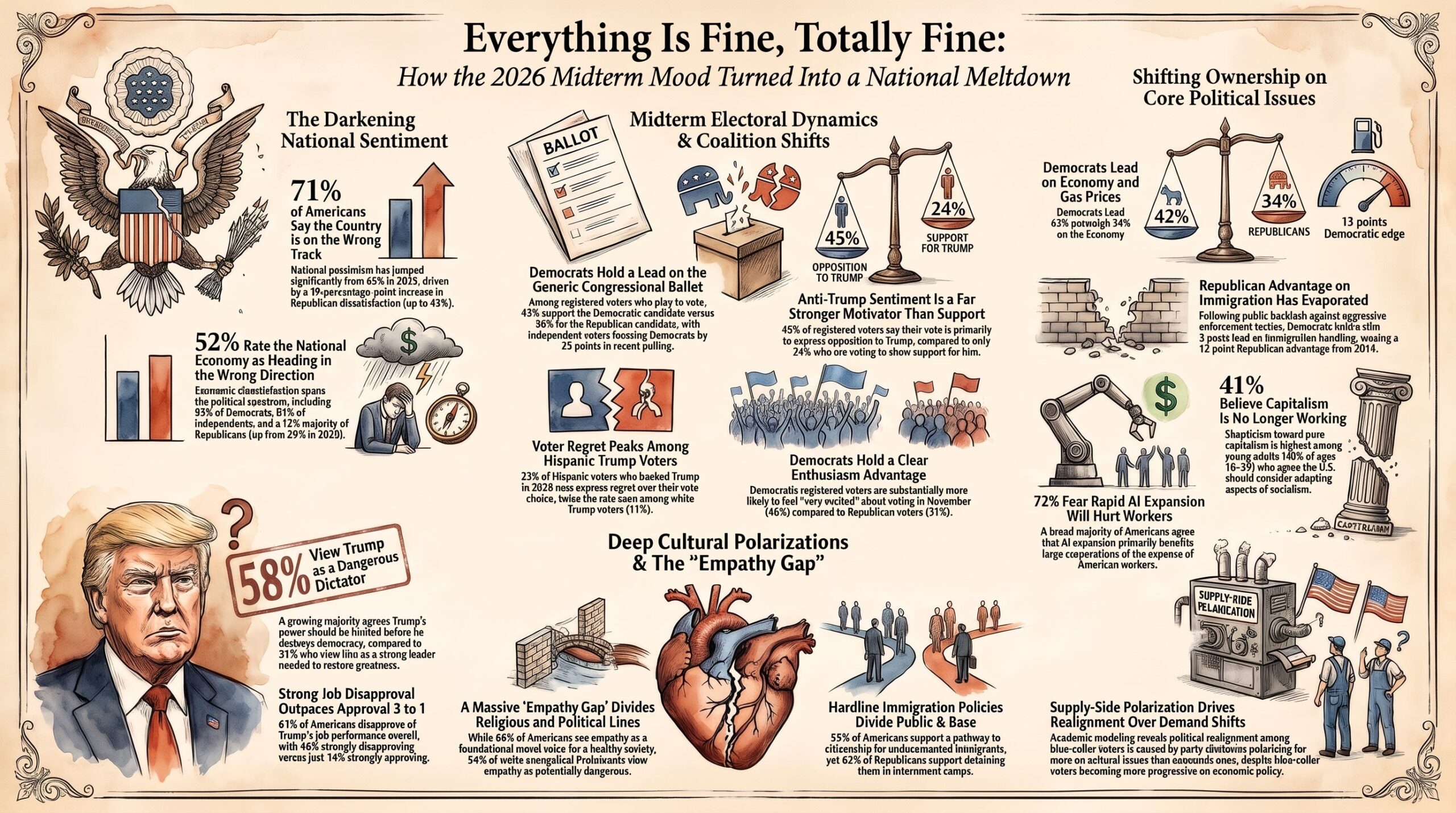
As the 2026 midterm elections approach, a notable trend has emerged: a significant number of voters who do not identify as Democrats are nonetheless supporting Democratic candidates down the ticket. This phenomenon has been attributed to various factors, including voter motivation, demographic shifts, and the impact of current political issues.

The Current Political Landscape
Recent polling indicates a Democratic advantage that is shaping voter preferences heading into the midterms. As of late October 2026, registered voters favor Democratic House candidates by 44% to 36%, and among likely voters, this advantage jumps to a 54% to 41% margin. This shift is bolstered by heightened enthusiasm from Democratic voters, who express a strong motivation to engage in the electoral process, driven by concerns over crucial issues like healthcare, climate change, and social justice.
Key Factors Influencing Voting Behavior
- Voter Motivation: Democratic supporters are reporting a high level of motivation to vote, often more so than their Republican counterparts. Many Democrats describe control of Congress as a critical factor, prompting them to turn out in larger numbers.
- Demographic Changes: Participation rates among key demographic groups, particularly Black and Latino voters, are significantly higher compared to previous midterm elections. Concurrently, Republican participation has seen a decline in various states, suggesting a shifting landscape that may contribute to Democrats gaining votes among traditionally Republican-leaning districts.
- Early Voting Trends: With over 13 million ballots cast by mid-October, early voting is significantly up from previous midterm cycles. States such as Texas and Kansas have seen a surge in early participation, primarily from Democratic and unaffiliated voters, further indicating a tightening race. Notably, Democrats tend to favor mail-in ballots, while Republicans often opt for in-person voting on Election Day.
- Political Climate: Given the current political environment, including various urgent issues such as economic concerns, healthcare accessibility, and social justice movements, many voters find themselves aligning with Democratic principles even if they do not officially identify as Democrats. These issues resonate across party lines, compelling some Republicans and independents to support Democratic candidates.

Conclusion
The 2026 midterms are shaping up to be a pivotal moment in American politics, with a significant number of non-Democratic voters casting ballots for Democratic candidates. This trend reflects a complex interplay of voter motivation, demographic shifts, and the pressing political climate. As Election Day approaches on November 3, the ultimate impact of these factors remains to be seen, but current trends indicate a potentially transformative electoral outcome.